5.4. Lifecycle & Messaging¶
Lifecycle and messaging are the runtime spine of VMx. Construction transitions, property messages, and collection events are coordinated so parent and child trees behave predictably across flavors.
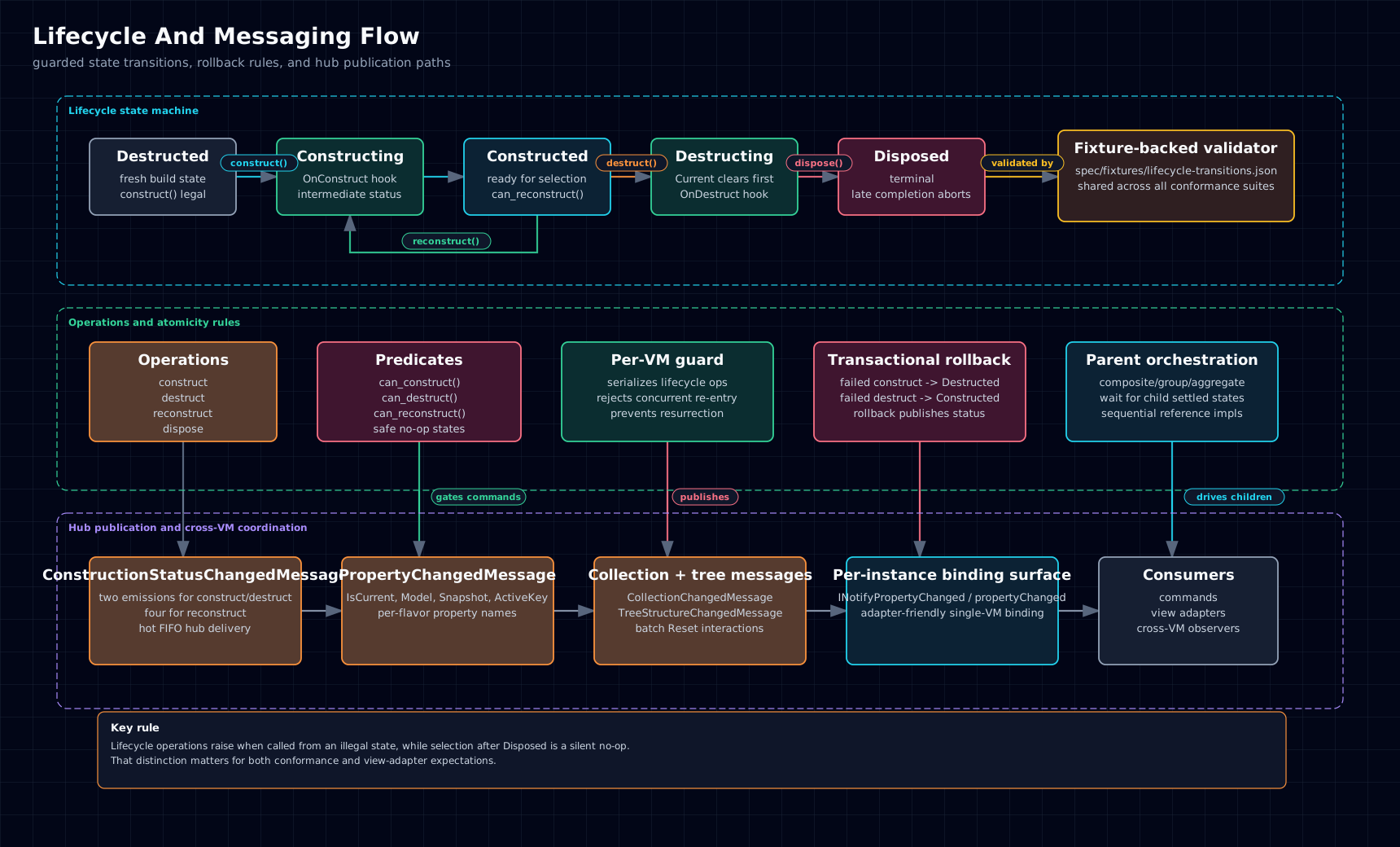
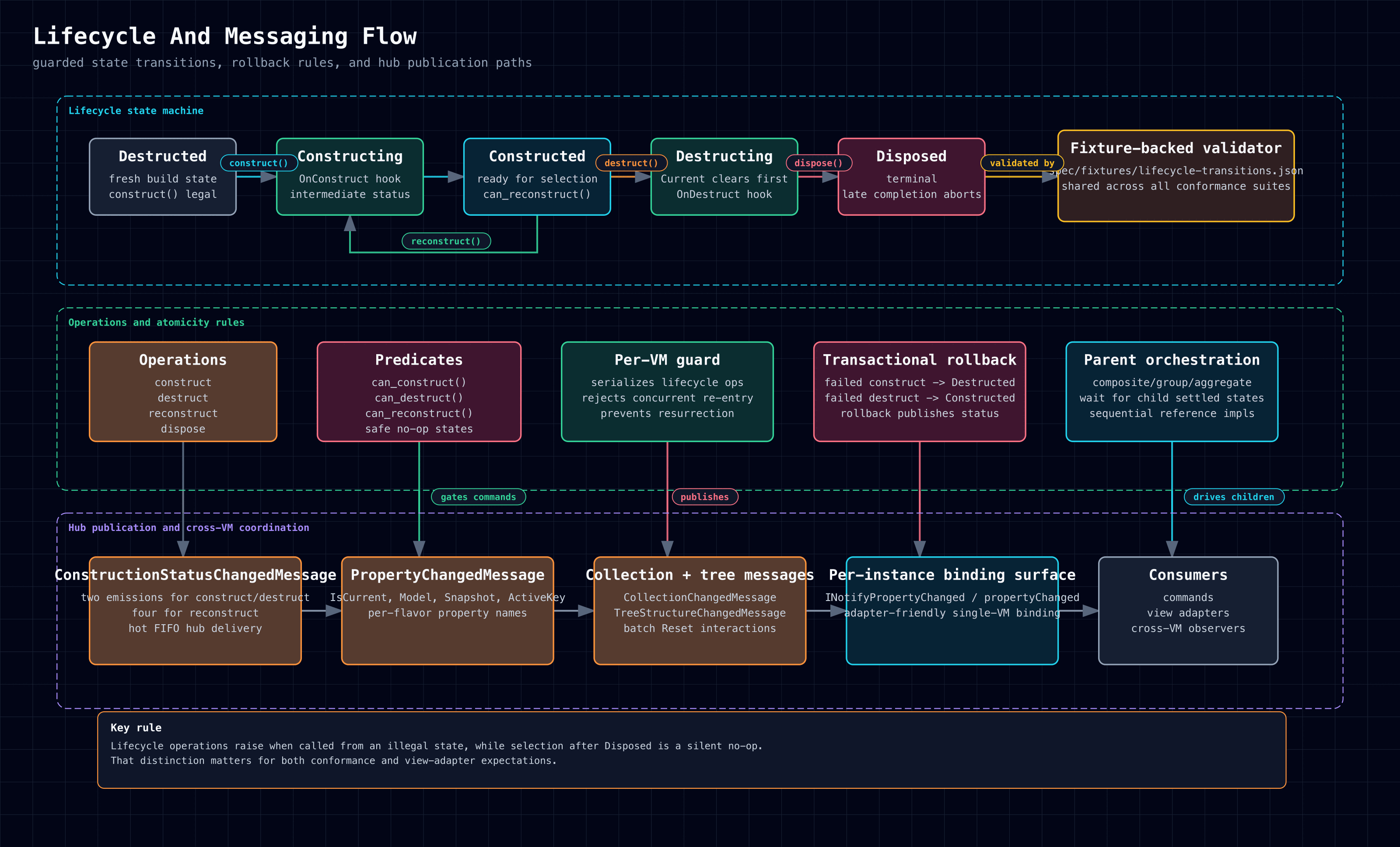
This view is most useful when you need to reason about construct/destruct ordering, hub notifications, or how state changes propagate across a VM tree.
5.4.1. Callback-Safe Transition Ordering¶
Lifecycle state admission and lifecycle callback delivery are deliberately
separate. Each VM atomically validates a transition, writes Status, and
reserves its place in a per-VM FIFO. Hub subscribers, local property observers,
command triggers, and lifecycle waiters then run after the private state guard
has been released. This preserves terminal Disposed ordering without letting
two VMs deadlock when concurrent observers call lifecycle operations on one
another. An ordinary foreign lifecycle call still waits for its publication;
only a wait that would close an actual cross-VM cycle may defer to the target's
existing drainer. See ADR-0117 and specification chapter 02 §2.4.
The same principle applies to MessageHub delivery: callbacks run from an ordered drain, not while a hub's state lock is held. Subscriber code should still avoid unbounded publish cycles; development diagnostics identify those cycles without truncating finite production delivery.
Concurrent hubs preserve synchronous delivery when a callback targets an unrelated busy hub. A small wait-for graph changes behavior only when waiting would close an actual cross-hub cycle: sends defer to the target drain, disposal leaves terminal intent, and a cyclic batch temporarily borrows the target queue until its body exits. This is the narrow liveness rule in ADR-0119, not a general callback-mode relaxation.