6.2.4. Group Family
6.2.4.1. When To Use It
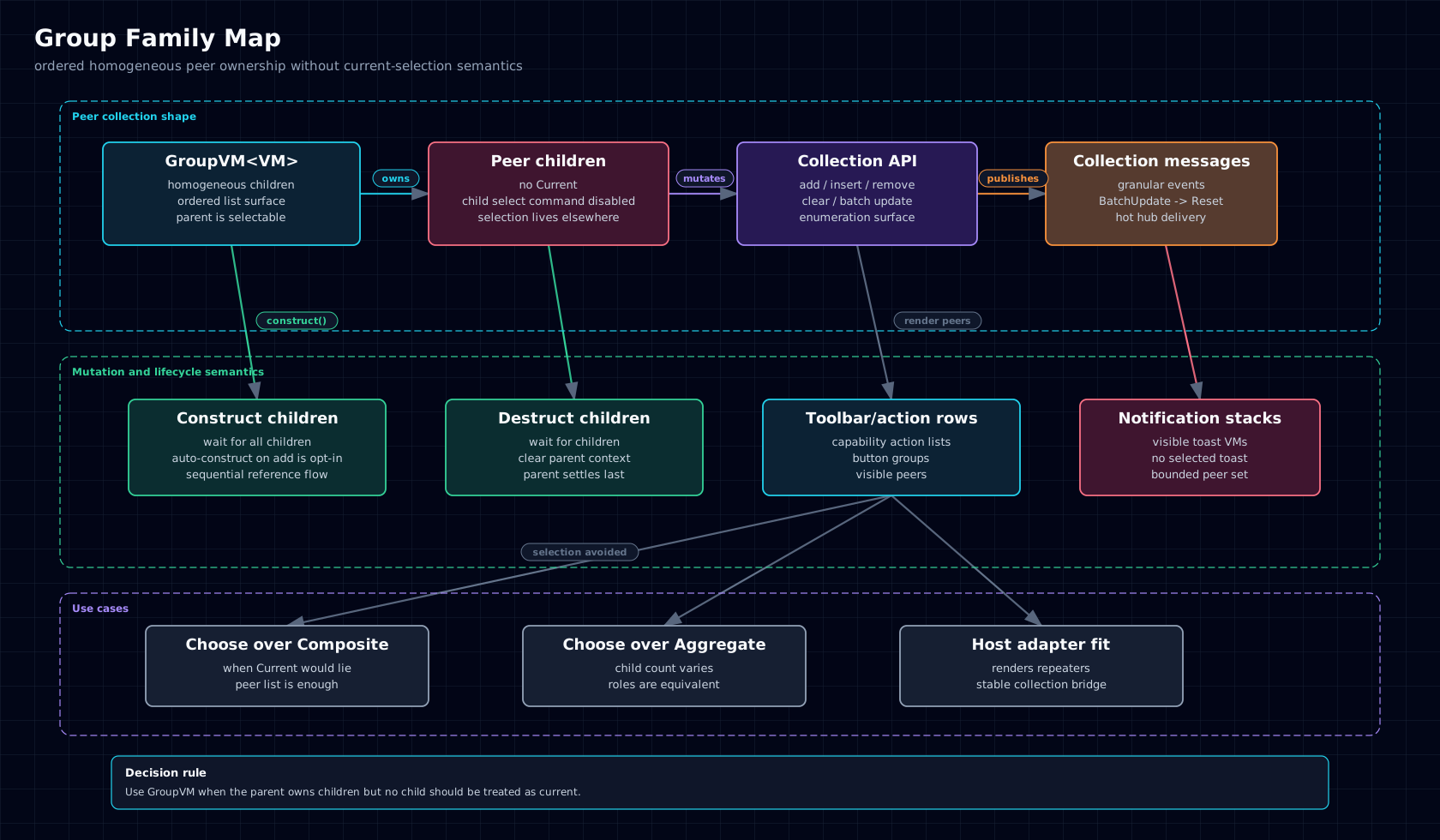
Use GroupVM<VM> for an ordered collection of peer children when the parent
owns the children but does not own a selected child. Toolbars, capability rows,
stacked panels, and other peer lists usually belong here.
6.2.4.2. Shape And Ownership
GroupVM mirrors the list-management surface of CompositeVM without the
selection slot:
- ordered children
- add, insert, remove, replace, clear, atomic move, batch update
- collection-changed notifications
- no
Current - no
select_component/deselect_component
The group itself is still a component and may be selected by its own parent. It implements the base VM Collection Contract, not its selectable extension.
Group membership uses the same exclusive ownership protocol as composites. Attaching a child owned by another mutable container is one atomic transfer: the old removal precedes the new add notification, and a failed destination attach restores the old index and parent link. Duplicate identity and ancestor cycles are rejected before mutation.
Destination and old-parent membership remain isolated through hooks and commit/rollback. Re-entrant structural mutation is rejected, reverse-order bulk transfers use deterministic reservation ordering, destination disposal is rechecked after auto-construction, and lifecycle compensation failures are surfaced rather than swallowed (ADR-0118).
Deferred old-parent disposal follows the same committed boundary. Successful transfer notifications finish before a deferred disposal failure is surfaced; after a failed attachment, rollback and disposal complete without replacing the earlier attachment error. Committed factory population remains one-shot even when the later disposal step fails (ADR-0122).
6.2.4.3. Lifecycle And Messaging
Lifecycle orchestration matches CompositeVM:
- construct waits for all children to reach
Constructed - destruct waits for all children to reach
Destructed AutoConstructOnAdd(true)can opt into post-construct child auto-constructBatchUpdate()suppresses per-mutation collection events and emits one reset
Group children are peers. Their inherited select command must stay disabled while the group is their parent.
6.2.4.4. Cross-Language Surface
| Concept | C# | Python | TypeScript | Swift | Rust |
|---|---|---|---|---|---|
| Type | GroupVM<VM> |
GroupVM[VM] |
GroupVM<VM> |
GroupVM<VM> |
GroupVm<VM> |
| Builder entry | GroupVM<VM>.Builder() |
GroupVMBuilder[VM]() |
GroupVM.builder<VM>() |
GroupVM<VM>.builder() |
GroupVm::<VM>::builder() |
| Children setter | Children(...) |
children(...) |
children(...) |
children { ... } |
children(...) |
6.2.4.5. Example
Representative build shape:
C#:GroupVM<IComponentVM>.Builder().Name("actions").Services(hub, dispatcher).Children(() => new[] { save, delete }).Build()Python:GroupVMBuilder[ComponentVMProto]().name("actions").services(hub, dispatcher).children(lambda: [save, delete]).build()TypeScript:GroupVM.builder<ComponentVMBase>().name("actions").services(hub, dispatcher).children(() => [save, delete]).build()Swift:try GroupVM<ComponentVMBase>.builder().name("actions").services(hub: hub, dispatcher: dispatcher).children { [save, delete] }.build()Rust:GroupVm::<ComponentVm<_>>::builder().name("actions").services(hub, dispatcher).children(|| vec![save.clone(), delete.clone()]).build()?
Rust ships the same peer-container and builder concepts; the completed Rust parity ledger records its non-member removal evidence.
6.2.4.6. Common Pitfalls
- Reaching for
GroupVMwhen the UI has one meaningful active child. That isCompositeVM. - Assuming peer children become selectable because they inherit leaf commands. The group contract keeps those commands disabled.
- Expecting a child to remain in its former parent after adding it here. VMx transfers mutable ownership rather than permitting two parent lists.
- Forgetting that group batching affects collection events only, not any separate list or observable helper you compose beside it.