5.18. join_optimization-tpch-spark-iceberg
Optimizes Spark join strategies for large-scale TPCH data with Iceberg table partitions, exploring broadcast joins, sort-merge joins, and bucket joins for different data sizes.
1. Purpose
Performance optimization of join operations is a critical concern in data engineering. This scenario demonstrates three join optimization techniques with Spark and Iceberg on TPCH data: (1) broadcast joins for small tables, (2) sort-merge joins for large tables, and (3) bucket-aware joins where both tables are bucketed on the join key. It compares performance characteristics and shows when each strategy is most effective.
2. Data Model
2.1 Input Source
Source: TPC-H Parquet objects from one resolver-verified immutable generation published by make datasets.
| Column | Type | Source |
|---|---|---|
| Various TPCH columns | varied | tpch tables (lineitem, orders, customer, supplier, etc.) |
2.2 Output Tables
| Table | Layer | Key Columns |
|---|---|---|
lakehouse.silver.tpch_joined_optimized |
Silver | TPCH joins optimized with broadcast, sort-merge, and bucket strategies |
3. Architecture
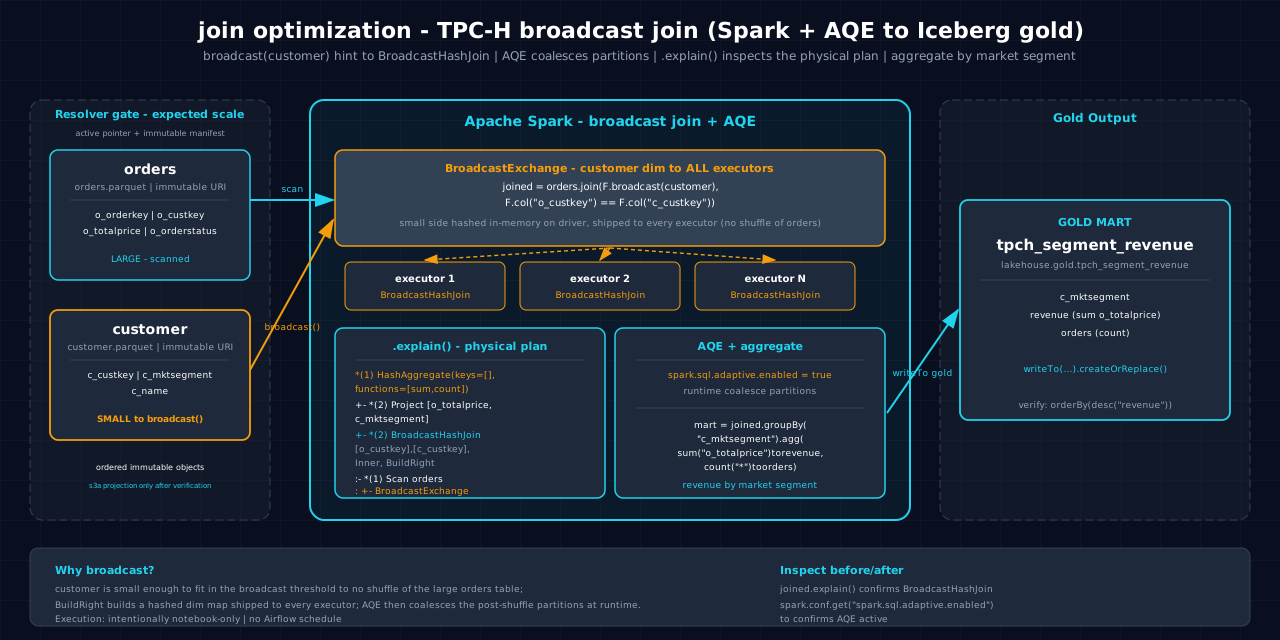
TPCH parquets flow from S3 landing zone into Spark for join optimization demonstration. Multiple join strategies (broadcast, sort-merge, bucket) are applied to TPCH tables, with performance comparison output showing which strategy is optimal for each data size and join key configuration.
4. Notebooks
- Zeppelin (Scala):
zeppelin/notebook.zpln— Sections: Overview, Read TPCH Tables, Broadcast Join (small table), Sort-Merge Join (large tables), Bucket Join (bucketed tables), Compare Performance, Verify - Jupyter (PySpark):
jupyter/notebook.ipynb— Same sections; same join optimization logic using PySpark withhint("broadcast"), default sort-merge, and bucket configuration
Both languages implement identical join optimization approaches with multiple strategies and performance comparison sections.
5. Orchestration
Classification: intentionally notebook-only. No Airflow DAG or schedule exists. Join plans and timing depend on the selected scale and cluster, so this remains an operator-run performance experiment in the paired notebooks.
6. Usage
- Ensure the
silverIceberg namespace exists:scripts/register_iceberg.py - Populate the landing zone:
make datasets - Open either notebook on the Atlas stack.
- Verify:
7. Dependencies
- Dataset: resolver-verified immutable TPC-H Parquet generation
- Atlas services: A1-A4 (Spark, Iceberg, S3 catalog, lakehouse catalog)
- Other: None
8. Known Issues & Caveats
Notebook execution and Scala/PySpark parity are live-gated on Atlas A1-A4. The silver namespace must exist; run scripts/register_iceberg.py first. Performance comparison results are illustrative and depend on data volume and cluster configuration. Bucket joins require both tables to be bucketed on the join key.
9. See Also
- Related: bi_query-tpch-trino-iceberg — BI queries on TPCH
- Related: bi_query-tpch-trino-iceberg — Trino/SQL queries on TPCH gold marts
- Datasets
- Lakehouse Architecture