5.3. medallion-nyc_taxi-spark-iceberg
Transforms raw NYC taxi trip data from the bronze layer through silver (cleaned) to gold (aggregated), implementing the medallion architecture pattern.
1. Purpose
This scenario demonstrates the full medallion pattern: raw data is ingested into bronze, cleaned and typed in silver, and aggregated in gold for BI consumption. It models the real-world pattern seen in production lakehouses — progressive refinement of data quality and granularity through each layer. The bronze layer preserves the raw data, silver cleans and adds computed columns (duration, direction), and gold produces aggregated metrics by location and time.
2. Data Model
2.1 Input Source
Source: lakehouse.bronze.nyc_taxi_trips (populated by batch_ingest-nyc_taxi-spark-iceberg).
| Column | Type | Notes |
|---|---|---|
VendorID |
double | Vendor identifier |
tpep_pickup_datetime |
timestamp | Pickup timestamp |
tpep_dropoff_datetime |
timestamp | Dropoff timestamp |
passenger_count |
double | Number of passengers (canonicalized in Bronze) |
trip_distance |
double | Trip distance in miles |
fare_amount |
double | Fare amount |
total_amount |
double | Total amount |
PULocationID |
int | Pickup location ID |
DOLocationID |
int | Dropoff location ID |
2.2 Output Tables
| Table | Layer | Key Columns |
|---|---|---|
lakehouse.silver.nyc_taxi_trips |
Silver | Same as bronze + trip_duration, start_hour, trip_direction |
lakehouse.gold.daily_location_stats |
Gold | pulocationid, dolocationid, date, avg_duration, avg_fare, trip_count, total_revenue |
3. Architecture
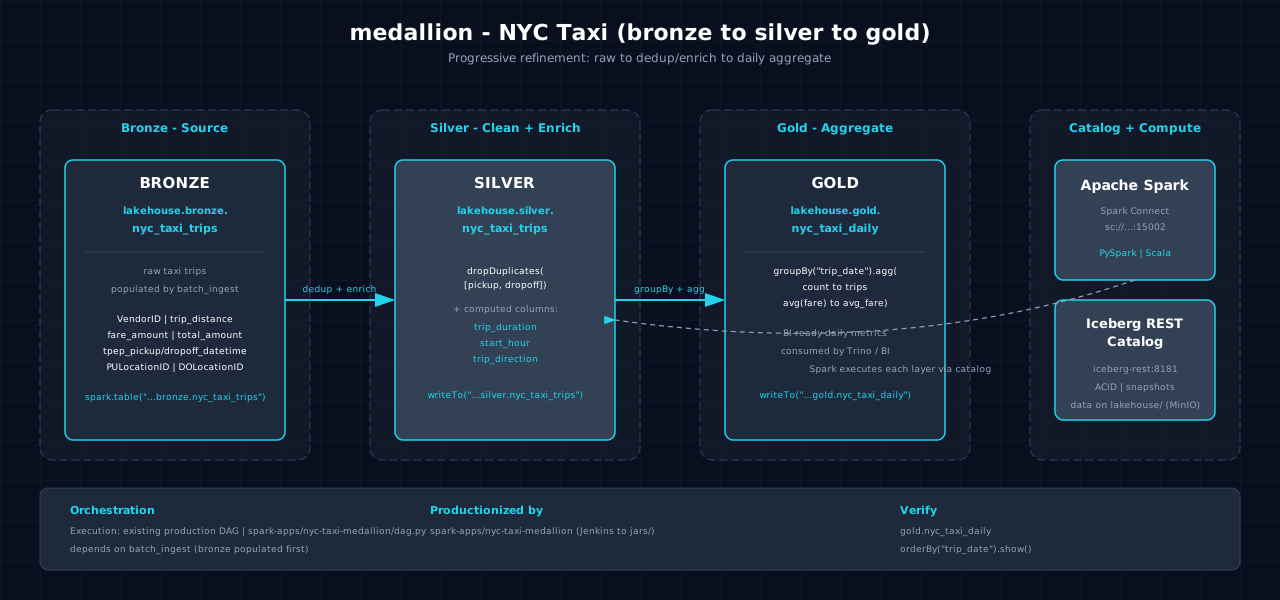
NYC taxi trip data flows from the bronze table (raw) through Spark batch processing into the silver layer where trips are cleaned and enriched with computed columns (trip_duration, start_hour, trip_direction). From silver, data is aggregated into gold with daily per-location statistics including average duration, average fare, trip counts, and total revenue.
4. Notebooks
- Zeppelin (Scala):
zeppelin/notebook.zpln— Sections: Silver Transform (clean + enrich), Gold Aggregation (group by location + date), Verify Both Layers - Jupyter (PySpark):
jupyter/notebook.ipynb— Same sections; same silver cleaning logic using PySpark, gold aggregation using PySparkgroupBy
Both languages implement identical silver enrichment and gold aggregation logic across two notebook cells.
5. Orchestration
Classification: existing production DAG. The production entrypoint is spark-apps/nyc-taxi-medallion/dag.py (nyc_taxi_medallion), scheduled @daily with manual runs supported after the Bronze prerequisite exists. The paired notebooks remain the interactive teaching surface; the deleted scenario-local no-op is superseded.
6. Usage
- Ensure all three Iceberg namespaces exist:
scripts/register_iceberg.py - Populate the bronze layer (if not already done):
airflow dags trigger nyc_taxi_etl - Open either notebook on the Atlas stack.
- Verify:
7. Dependencies
- Dataset: NYC taxi trip data (via
lakehouse.bronze.nyc_taxi_tripspopulated by batch_ingest) - Atlas services: A1-A4 (Spark, Iceberg, S3 catalog, lakehouse catalog)
- Other: None
8. Known Issues & Caveats
Notebook execution and Scala/PySpark parity are live-gated on Atlas A1-A4. All three namespaces (bronze, silver, gold) must exist; run scripts/register_iceberg.py first. Depends on the batch_ingest scenario producing the bronze table first.
9. See Also
- Related: batch_ingest-nyc_taxi-spark-iceberg — Produces the bronze source table
- Related: data_quality-nyc_taxi-spark-iceberg — Quality checks on ingested data
- Production Spark app: nyc-taxi-medallion — Phase-3a JAR productionizes this scenario for Airflow
- Datasets
- Lakehouse Architecture